

 Finding the right shoe can make all the difference in how your feet — and even your whole body — feels throughout the day. It’s not just about picking the right size; it’s about choosing a shoe that fits your lifestyle, supports your movement, and keeps you comfortable. Your shoes should feel good the moment you put them on, move naturally with your feet, and hold up to whatever your day brings.
In this guide, Orthopaedic Hospital of Wisconsin physical therapist, Erin Woody, PT, DPT, CFMT, discusses the four most important aspects affecting footwear fit and comfort. She helps to guide you in that to consider when selecting your best pair of shoes that will have you feeling your best to put your best foot forward.
Key Fit Considerations: What to Look for in a Shoe
A shoe is more than just a simple piece of footwear—it’s a collection of carefully designed components that influence comfort, performance, and support.
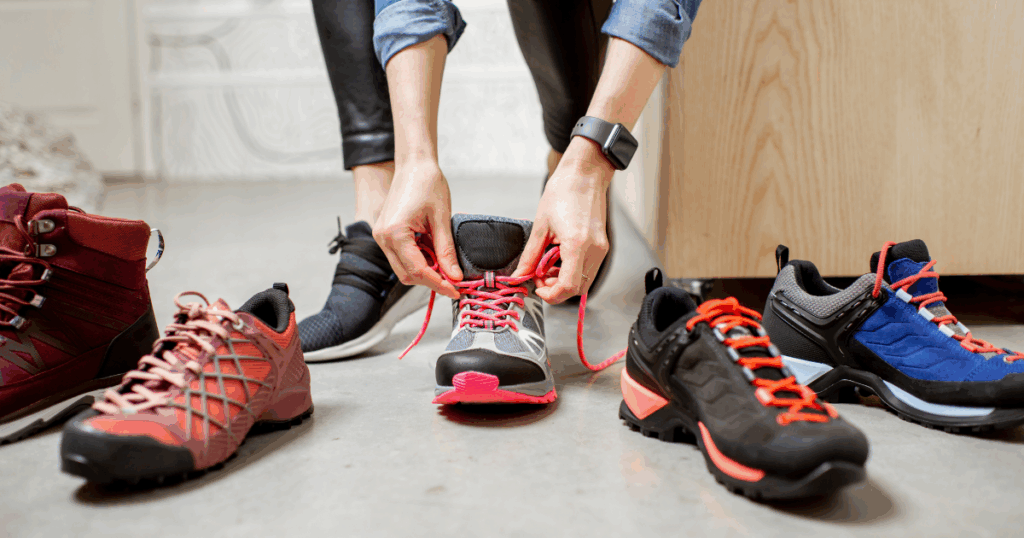
1. Proper Shoe Length
Proper shoe length means that the shoe gives your toes the space to move and flex naturally without feeling cramped or too loose. It’s the distance between the heel and the longest toe when standing.
- Your longest toe should have about ½ inch of space from the end of the shoe (about a thumb’s width). If your toes press against the front of the shoe while walking or running, size up!
- The shoe should bend where your foot naturally flexes (at the ball of the foot).
- Heels stay secure without slipping.
- Shoes that are too short can lead to toe and nail problems, or circulation issues:
- Blisters and calluses: Constant rubbing against the inside of the shoe creates friction points.
- Ingrown toenails: Pressure on the front of the toes can force the nail edges into the skin.
- Corns: Form over bony areas (like the tops of toes) when the shoe compresses them.
- Hammer toes: Continuous crowding causes toes to curl or deform over time.
- Restricted blood flow: Leading to numbness, tingling (especially in the toes), or a “pins-and-needles” sensation
2. Toe Box Width
The toe box is the front portion of the shoe that surrounds and protects your toes Its width and depth determine how much room your toes have to spread, flex, and move naturally during walking or running.
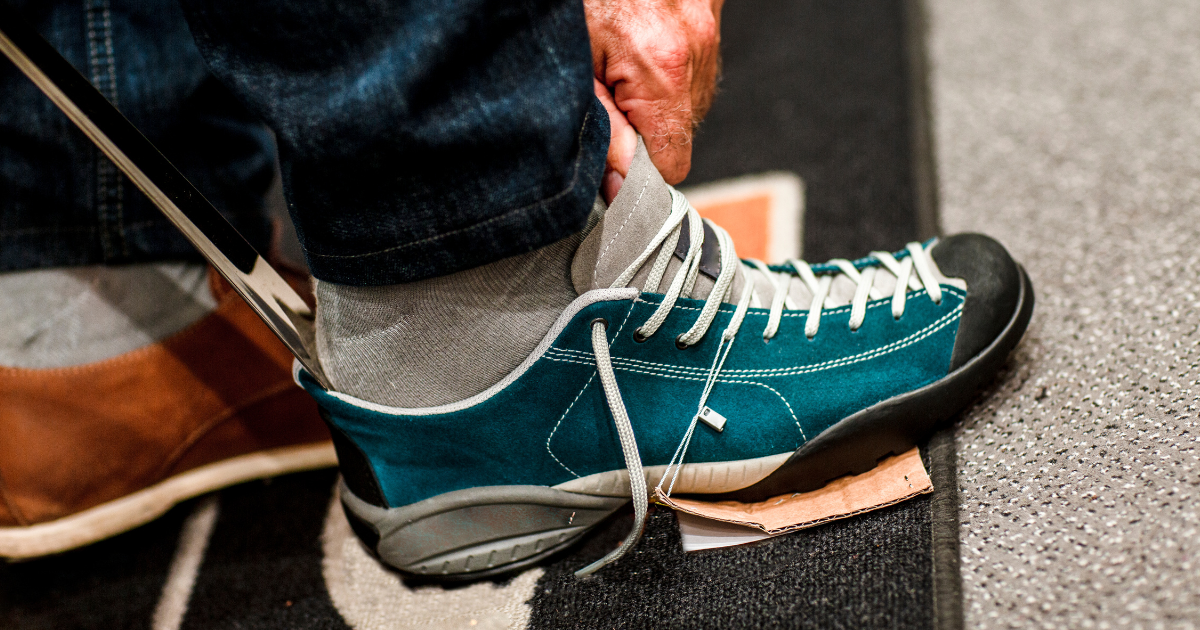
- The toe box should allow your toes to spread out (splay) naturally when you walk or run to stabilize your body and distribute weight evenly
- A wider toe box reduces pressure and friction to minimize the risk of blisters, bunions (hallux valgus), neuromas, or overlapping toes due to lack of space.
- Check that your toes can wiggle freely.
- Pinch the sides of the toe box — you should feel a little give. If the shoe feels rigid and presses into your toes, it’s too narrow
- Some common brands of walking / running shoes that are known for wider toe boxes include Altra, Topo Athletic, New Balance, Xero, and Lems. Be sure to check with your local shoe store for more brands that offer wider toe box options.
3. Heel Alignment and Stability
The heel acts as the “rudder” of the foot, and the heel support refers to how the shoe cradles and stabilizes the heel area, preventing unwanted motion and helping align the foot and leg.
Heel Counter
- The firm cup at the back of the shoe that holds the heel in place.
- Prevents excessive pronation (foot rolling inward) or supination (rolling outward).
- It should feel snug but not tight — your heel shouldn’t lift as you walk.
Heel Cup
- A contoured depression in the insole or midsole that centers and cushions the heel.
- Helps distribute pressure evenly across the heel and reduce strain on the plantar fascia.
Heel Drop (or Pitch)
- The height difference between heel and forefoot.
- A higher heel drop (8–12 mm) provides more heel cushioning and can reduce tension in the Achilles tendon.
- A lower or “zero drop” shoe encourages a more natural gait but demands stronger foot and calf muscles.
Heel Collar and Padding
- The soft, padded rim around the ankle and heel opening.
- Prevents friction, blisters, and slippage.
- Enhances comfort and helps lock the heel securely
4. Fit During Activity
Dynamic movement (walking, running, climbing, etc.) causes your feet to expand, flex, and shift within the shoe.
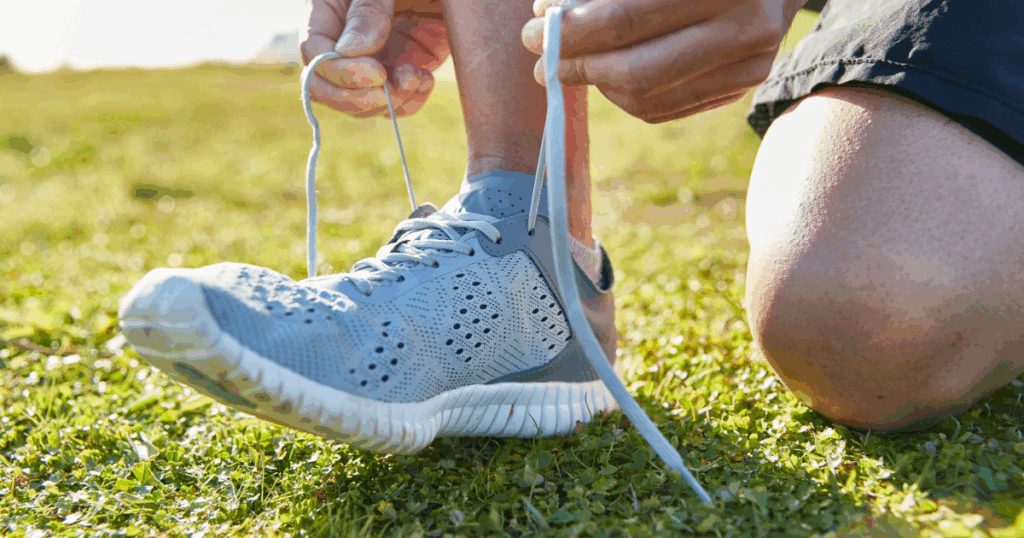
- Shoes should feel comfortable as soon as you try them on—don’t rely on a “break-in” period.
- Try shoes on in the afternoon (feet swell 5-8% through the day)
- Wear the same type of socks you plan to wear with the shoes.
- Walk around and test the shoes on different surfaces to check for tight spots, slipping, or rubbing.
The other key factors to consider when buying a shoe, beyond the four factors above are shoe construction and materials, midfoot support, cushioning level, heel-to-toe drop, and the weight of the shoe. Many of these factors are more variable based on individual preferences. Finding the right shoe is an investment in your comfort, performance, and overall foot health. By considering fit, cushioning, support, and style, you can choose footwear that not only looks good but keeps you comfortable and confident all day long.
Need help to find the perfect pair? Talk to your physical therapist — they can help you choose shoes that match your feet, your movements, and your goals.
Click here to make an appointment with our team of orthopedic specialists or call (414) 961-6800.